

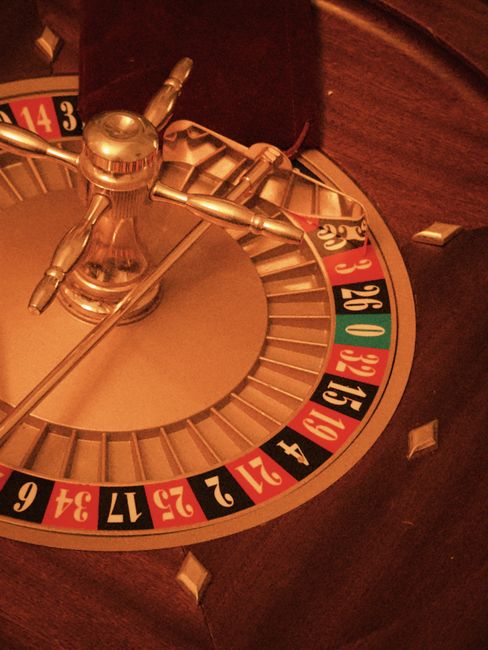
Every casino floor has that one guy. You know the type — the one who swears he's cracked the code, that the slots are "due" to pay out, that the roulette wheel has a memory. He's been chasing the same progressive jackpot for three hours and he's convinced the next spin is the one. Spoiler: it isn't. But here's the thing — understanding why he's wrong is exactly what separates a casual player from someone who actually knows how to enjoy iGaming without getting fleeced.
The modern online casino and betting world has never been more accessible, more sophisticated, or more dangerous. You can spin reels on your phone during a lunch break, join a poker tournament halfway across the world at 2 a.m., or place a same-game parlay on a Sunday afternoon without ever standing up. That convenience is incredible — and it's also the whole problem. So let's talk about how the games actually work, what edge means, and how to treat this stuff as entertainment rather than a retirement plan.
The Mathematics Nobody Wants to Hear
Let's get the uncomfortable part out of the way. Every casino game — physical or digital — is built around a house edge. That's not a conspiracy; it's the business model. The question isn't whether the house has an edge. It's how big that edge is and whether you're playing a game where your money at least lasts a while. For more on this, see สล็อต.
Take slot machines, the most popular product in the industry by revenue. Modern video slots run on random number generators, or RNGs, which produce thousands of outcomes per second. Every spin is independent. The machine doesn't "warm up," and a jackpot that hasn't hit in months isn't "overdue." That's the gambler's fallacy, and it's responsible for more lost rent money than any bad beat in poker history.
The key statistic to understand on slots is RTP — return to player. An RTP of 96% means that over millions of spins, the game returns 96% of wagered money to players and keeps 4% for the operator. Some high-volatility titles sit at 94%, while certain low-volatility classics push 97%+. Here's the practical takeaway:
- High RTP + low volatility = smaller swings, longer playtime, more consistent but modest returns.
- High RTP + high volatility = rare big wins, long dry spells. Better for entertainment, brutal on a small bankroll.
- Low RTP anything = skip it unless you're just there for the theme and sound effects.
Meanwhile, table games are a different story entirely. Blackjack played with basic strategy can bring the house edge below 0.5%. Baccarat's banker bet hovers around 1.06%. And craps? Pass line with full odds can push your expected loss remarkably low if you know what you're doing. Compare that to a random slot and it's not even close — which is why anyone serious about stretching their bankroll should at least learn the table games.
Poker Is the Only Game Where You Can Actually Have an Edge
Here's where the conversation shifts. In slots, roulette, and most betting markets, you're playing against a mathematical certainty. In poker, you're playing against other humans — and humans make mistakes. That single distinction is why skilled poker players can be genuinely profitable over the long run while slot players cannot.
Poker combines probability, psychology, and game theory in a way few activities do. Yes, you still lose to bad beats. Yes, variance will make you question your life choices at 3 a.m. when your aces get cracked by a guy who called your three-bet with 7-4 offsuit. But over a sample size of tens of thousands of hands, the better player wins. That's not opinion; that's math.
A few fundamentals that separate winners from donations:
- Position matters more than cards. Acting last gives you information everyone else has to act without. It's the single biggest edge in any poker variant.
- Bet sizing tells a story. Inconsistent sizing is a leak. Consistent, polarized sizing makes you hard to read.
- Bankroll management is non-negotiable. A common rule is at least 20 buy-ins for cash games, 50+ for tournaments. Ignore it and you'll be rebuying with your grocery budget.
- Game selection beats everything. Sitting at the softest table in the room is worth more than any advanced strategy.
Sports Betting: Where Lines Tell the Truth
Online sports betting has exploded in popularity, and for good reason — it makes every game feel like it matters. But the betting public has some hard lessons ahead. Bookmakers aren't charities. They price markets with a margin baked in, and that margin sits between 4% and 8% on most standard markets.
Here's something most casual bettors don't internalize: the vigorish, or vig, is what keeps the book profitable regardless of who wins. A standard -110 line means you're risking $110 to win $100. To beat that long-term, you need to win more than 52.4% of your bets just to break even. That's a high bar.
Sharp bettors find value in a few specific ways: line shopping across multiple books, exploiting soft opening lines before the market corrects, and focusing on niche markets where the books haven't invested as much in accurate pricing. Props, alternate lines, and live betting during odd game situations sometimes offer genuine edges. But if you're just firing off parlays because they're fun, be honest with yourself — that's entertainment spending, not investing.
The Slot Machine Reality Check
Slots deserve their own honest conversation. They're the most popular game in the industry for a reason: they're simple, visually stimulating, and psychologically engineered to keep you playing. Bonus rounds, near-miss animations, and escalating sound effects aren't accidents. They're design choices.
That doesn't make them evil, but it does mean players should approach them with clear expectations. A few practical habits help:
- Set a loss limit before you open the game and treat it as a sunk cost, not a target to recover.
- Check the RTP and volatility rating — good casinos publish these in the game info panel.
- Use free demo modes to learn a slot's mechanics before betting real money. Most modern platforms offer this.
- Never chase. The next spin is statistically identical to the last one.
A Realistic Mindset for the Long Haul
The honest truth about iGaming is that it's entertainment with a built-in cost, similar to going to a concert or eating at a nice restaurant. You pay for the experience. If you occasionally walk away with more money than you came with, that's a bonus — not a strategy. The people who treat casinos as an investment vehicle are the same ones funding the free drinks for everyone else.
That said, there are genuinely smart ways to engage with the industry. Learn blackjack basic strategy. Pick poker over pure-chance games if you want a skill edge. Shop lines if you bet sports. Understand RTP, house edge, and variance well enough to pick games that give your bankroll a fighting chance. And above all, set limits and stick to them — money, time, and emotional energy all count.
The house does win over time. That's the design. But a player who understands the math, respects the variance, and treats the whole thing as a paid hobby rather than a payday can genuinely enjoy iGaming for what it is — a fascinating, adrenaline-rich, beautifully engineered form of entertainment. The trick isn't beating the house. It's not getting beaten by your own expectations.


Comments